Dr Potlako Mafa, a former student of the National University of Lesotho (NUL), now a Post-Doctoral Fellow at the University of South Africa (UNISA), has created an incredible material that can clean polluted water using sun light! He uses this material to remove a dangerous chemical called oxytetracycline (OTC) from rivers and lakes.
OTC is a medicine used to treat diseases both in people and animals. But once it enters the environment, it doesn’t go away easily. It stays in the water for a long time. There it becomes a danger to fish, plants, and people who drink the water.
It is an antibiotic.
Antibiotics are medicines used to fight bacteria that causes disease!
“Antibiotics like OTC are everywhere,” Mafa explains. “They come from farms, hospitals, and even people throwing away medicine incorrectly. The problem is, once they reach our rivers, they can cause serious harm.”
To fix the problem Mafa and his team at the University of South Africa (UNISA) created a special material. It works like a magic sponge that not only traps OTC but also breaks it down into harmless substances.
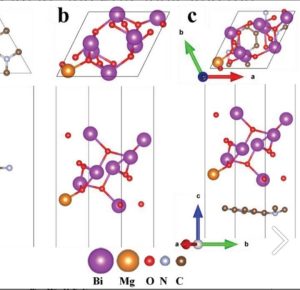
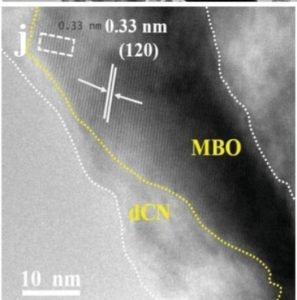
The material is called Mg-Bi₂O₃/dark gray g-C₃N₄ (MBOdCN) S-scheme heterojunction.
That’s a big name, but the idea behind it is simple—it uses light to destroy OTC in water.
“When light shines on the material, tiny charged particles inside it start moving,” Mafa explains. “These moving particles create a reaction that breaks OTC into harmless pieces. The best part? It doesn’t need any extra chemicals—just light and water!”
Before this discovery, scientists used expensive and slow methods to remove OTC from water. Mafa’s material is different—it’s faster, cheaper, and more effective. It removes 99.56% of OTC, making it one of the best solutions ever developed.
“Imagine dropping this material into a polluted body of water,” Mafa says. “In just a short time, the water would be much cleaner. It’s a simple way to fix a big problem.”
Cleaning OTC from water is not just about protecting fish and plants. It also helps prevent antibiotic resistance. When antibiotics stay in the environment for too long, bacteria can become stronger and harder to be killed by it. Bacteria sort of get used to it.
“This is one of the biggest health threats we face in our time,” Mafa says. “If antibiotics stop working, simple infections will kill. That’s why removing them from water is so important.”
To make the material, Mafa and his team tested different combinations until they found the best one. They checked how well it absorbed light, how fast it broke down OTC, and how long it lasted.
Mafa’s discovery was published in Advanced Sustainable Systems, a respected scientific journal https://advanced.onlinelibrary.wiley.com/…/adsu.202401070
__________
Visit MILCO at Sefika Shopping Complex—home to 100% made-in-Lesotho products. MILCO was founded by NUL Innovation Hub!