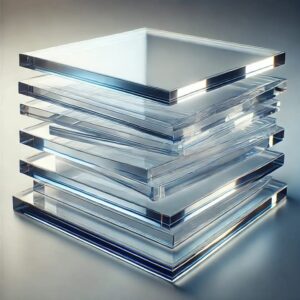
A Physics Lecturer at the National University of Lesotho (NUL), Mr. Sekhantšo Lara, says Lekokoaneng Sandstone can be used for more than just making great houses! “Not all sand can make glass. Our initial studies show that this stone contains sand (quartz) of such high quality that it can be used to make glass and even silicon, which is used in products like cellphones.” The sand is called silica sand.
He said this silica sand might also be useful in materials where strength is important, such as high-strength ceramics.
Mr. Lara and his NUL team are collaborating with a team from the University of Johannesburg (UJ) on this exciting project.
In geology, the sandstone Mr. Lara is referring to is called Clarens Sandstone. Lesotho geologists sometimes call it Cave Sandstone (because, oh boy! does it make caves!). Laypeople (like us) refer to it as Lekokoaneng Sandstone (Lejoe la Lekokoaneng).
The stone is found in most parts of the country. However, it is named after Lekokoaneng because the Lekokoaneng area, near TY, is where it is mined on a large scale. Miners sell it for housing, decoration, and tombstones.
According to Mr. Lara, there is more to this sandstone than meets the eye!
It contains a hidden treasure: silica sand that can be used to make glass.
Let’s think about glass. We see it everywhere. It’s used in our windows, jars, and prized kitchenware. But did you know that glass is made of silica sand called quartz? Silica sand is a material found in sandstone, which Basotho often call “lehlohlojane,” although the word can also refer to other types of hard stone fragments. Heating this sand at high temperatures and adding certain chemicals results in the kind of glass you see in your windows (don’t try this at home).
Here are examples of major types of glass made from silica sand:
Soda-Lime Glass: Used for windows and bottles.
Borosilicate Glass: Used for laboratory glassware because it resists chemicals.
Fused Silica Glass: Used for optical fibers, which are essential for modern high-speed telecommunications. If you use a landline phone, your voice likely travels through optical fibers.
While soda-lime glass requires moderately pure sand, optical fibers demand very high purity.
“Our initial work suggests that the silica sand in Lekokoaneng Sandstone can even meet the purity requirements for optical fibers,” said Mr. Lara.
That’s not all.
Electronic materials, such as computers and cellphones, are made from semiconductors. One such semiconductor is silicon, which is derived from silica sand. However, semiconductors require extremely pure silica sand. It appears that the sand in Lekokoaneng Sandstone may meet even such high standards.
To understand the significance of these findings, consider that manufacturers of glass and silicon often refine lower-quality quartz through expensive processes. This local sand may require far less processing.
But there’s a challenge, Mr. Lara revealed. Although the silica sand is nearly pure, the sandstone itself does not contain only silica sand.
“It contains plenty of other unwanted materials,” he said. “The challenge is developing a low-cost method to separate the silica sand from these impurities. While we are working on some separation methods, we’re also exploring another type of stone that seems to have a higher content of silica sand than Lekokoaneng Sandstone,” he added. “Although this other stone may contain more silica sand, it hasn’t yet been fully tested to determine its quantity or quality. However, it appears the purity of its sand might not match that of Lekokoaneng Sandstone.”
Mr. Lara also found it fascinating that the individual sand particles in the sandstone had a platy shape and small size as seen under a powerful microscope. This gives the particles a high surface area. It makes them good for use in high-strength ceramics and as fillers in plastic materials.
Before we conclude, let’s explore the remarkable history of Lekokoaneng (Clarens) Sandstone. This unique stone was formed from dust carried by the wind and was deposited around 200 million years ago. At that time, South America was still connected to Africa as part of the supercontinent Pangaea.
Interestingly, some evidence suggests that the dust may have originated from South America.
During this period, the Maloti Mountains of Lesotho had not yet formed. Later, volcanic eruptions occurred, with lava flowing through the dust deposits and covering the entire region. The Maluti Mountains were in the making. Over millions of years, the pressure and heat from these volcanic layers compressed the dust below. It transformed this dust into the Clarens Sandstone we see today.