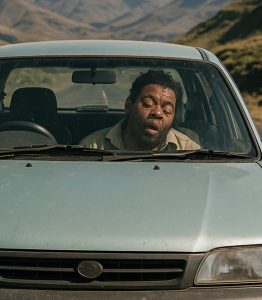
An Electronics Engineering Student at the National University of Lesotho (NUL), Shoeshoe Mosenene, has designed a prototype that could help save countless lives—by stopping drunk drivers from starting their engines! When someone tries to start the car, the system turns on. First, it takes a photo of the driver’s face with a camera. If the face doesn’t match the one saved in the system, the car won’t start. If the face matches, the driver must then blow into a breath tester. If they have too much alcohol in their breath, the car still won’t start. The car only starts if both tests are passed.
“I wanted to create a system that doesn’t wait to test drivers after they’ve already caused an accident,” Mosenene explained. “This one stops them before they get the chance to become a danger to our people — by preventing them from driving in the first place.”
The project, which was supervised by Dr. Molefe Makhele, combines two smart technologies: a breathalyser and a face recognition camera, both linked directly to the car’s ignition system. Together, they form what’s called a “breathalyser ignition system”—a device that only allows a car to start if the driver is both sober and authorised.
Drunk driving is a global problem, and Lesotho is no exception. According to the World Health Organisation (WHO), over 1.19 million people die every year from alcohol-related crashes and between 20 to 50 million suffer non fatal injuries. In one country alone, more than 34 people die every single day due to drunk driving. The need for a smarter, more preventive solution is urgent—and this project offers just that.
So, how does it work?
When a driver enters the car and attempts to start it, the system springs into action. First, it uses a camera to take a live photo of the driver’s face. If the face doesn’t match the one saved in the system’s database, the car won’t start.
But even if the face matches, the second test is just as critical: the breathalyser. The driver must blow into a sensor that checks their breath for alcohol. If the driver’s blood alcohol concentration (BAC) is above the legal limit, the system blocks the car from starting.
Only when both tests are passed does the car come to life. The green light flashes. The engine hums. The road is now safer for everyone.
But that’s not all. “We’ve added rolling retests,” Mosenene said. “Every 15 minutes, the system re-checks both the face and the breath to ensure the same sober driver is still in control. If anything seems off, lights flashes and an alarm goes off.” While the car won’t stop, the system will report this incidence immediately to the people with power to correct it.
This is important because it addresses one of the key weaknesses of older breathalyser systems: cheating. In the past, a sober person could start the car, and then hand it over to someone who is drunk. Not with this system! The camera ensures the same face remains behind the wheel throughout the trip.
The system was built for just 20 to 50 USD using affordable components.
“This is what makes it perfect for developing countries like ours,” Mosenene said. “The parts are cheap, but the impact can be huge.”
In tests, the system worked perfectly. When the face was recognised and no alcohol was detected, the engine started and the green light turned on. But when either the face was unknown or alcohol was detected, the system denied ignition and lit the red LED while sounding an alarm.
But Mosenene isn’t stopping here.
She envisions a future where insurance companies offer discounts to drivers who install this system. She also suggests that vehicle registration authorities like the Lesotho Traffic Agency could mandate it in all new taxis and public transport vehicles. “If you want to register your vehicle, prove that it’s sober-driver only,” she said.
Now that’s innovation with impact!
_______________
Brought to you by the NUL Innovation Hub: Where Academia Meets Industry