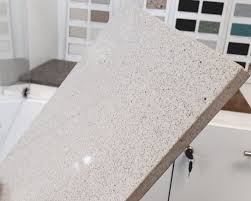
Yes! That’s exactly what Ketumile Kutumela, a student at the National University of Lesotho (NUL), is doing—using maths to design materials to be used in some of the world’s best kitchen countertops. “These aren’t just any countertops,” he explained, “they’re called quartz surfaces or engineered stones, and they’re made using two special sandstones found right here in Lesotho!”
Now hold on, before we start digging for diamonds, Ketumile says there’s something even better buried in Lesotho’s soil—sandstones! Just two types, in fact: the Lekokoaneng sandstone (also called Clarens if you’re into geology) and the Leseru sandstone (Molteno type). “It’s like they were made to work together,” Ketumile says with a grin.
Let’s take a quick time-travel trip, shall we?
About 200 million years ago, Lesotho was flooded. Rivers and streams everywhere! That’s when the Leseru sandstone was born. The quartz particles in this rock were shaped by flowing water. So they ended up being round, large, and came in lots of different sizes. Think of them like marbles—all slightly different, but smooth and solid.
But come closer, about 180 million years ago, and Lesotho was something totally different—a massive desert! That’s where the Lekokoaneng sandstone comes in. Instead of water, the sand in this rock was moved around by strong desert winds. And those winds brought sand all the way from… wait for it… Brazil! No joke! A long time ago, Brazil and Lesotho were much closer together than you think.
Wild, right?
Now here’s where it gets interesting.
Because the sand in the Lekokoaneng sandstone came from the wind, it’s super fine and almost all the same size—tiny, like dust. And guess what? Those tiny grains are just the right size to fit perfectly in the spaces between the big round particles from the Leseru sandstone. Like puzzle pieces! When you mix them together just right, with plastic material or cement to bind them, they form a super strong, solid material—perfect for kitchen countertops.
And here’s the real magic: most places in the world need big noisy machines called hammer mills to crush rocks into tiny bits for this kind of work. But in Lesotho, nature already did that job. “With Lekokoaneng sandstone,” Ketumile says, “you just separate the particles and you’re ready to go, no energy-hungry grinding.”
But wait—it’s not all digging, separating and mixing. This is where maths comes in.
You see, what separates engineered stone from your normal concrete is that you ain’t no just mixing. You follow complex equations to do it. When you’re making these countertops, it’s not just about using muscle. You need brainpower!
The goal is to make sure the big particles from the Leseru sandstone are completely surrounded by the tiny particles from Lekokoaneng sandstone. That’s how you make the material strong and long-lasting.
Before Ketumile started his work, three students at NUL had already created mathematical models for this idea. But there was one little problem—they only worked with three sizes of particles. “That’s not how real life works,” Ketumile said. “In real life, you get all kinds of particle sizes.” So he asked a big question: How do I create a model that works with ALL the sizes, not just three?
It sounded impossible. Even scientists and engineers around the world hadn’t figured it out, at least they haven’t reported it if they tried at all.
But Ketumile was hell-bent on doing it!
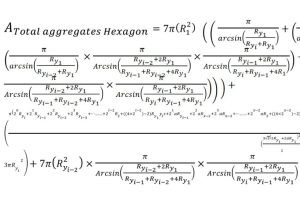
He worked on it for two years. He scratched his head, made mistakes, started over (a lot), and in the end… he created a model with more than 50 different equations!
Yep, 50. That’s a lot of maths!
“Sometimes you get it wrong 100 times before you get it right,” he laughed. But when he finally cracked the code, it all came together.
So the next time, hopefully in the near future, when you see a shiny kitchen countertop, just remember: it might look simple, but behind it could be 200 million years of natural history, two types of magical sandstones, and 50 amazing equations—all cooked up by a student who believed in the power of brains over brawn.